
Breed Comparisons
Nova Scotia Duck Tolling Retriever vs Border Collie
Both are among the smartest dog breeds in the world—but they have very different intensities and off-switches. The Toller is an independent, water-loving retriever; the Border Collie is a handler-focused herding powerhouse. This comparison helps you decide which fits your lifestyle.
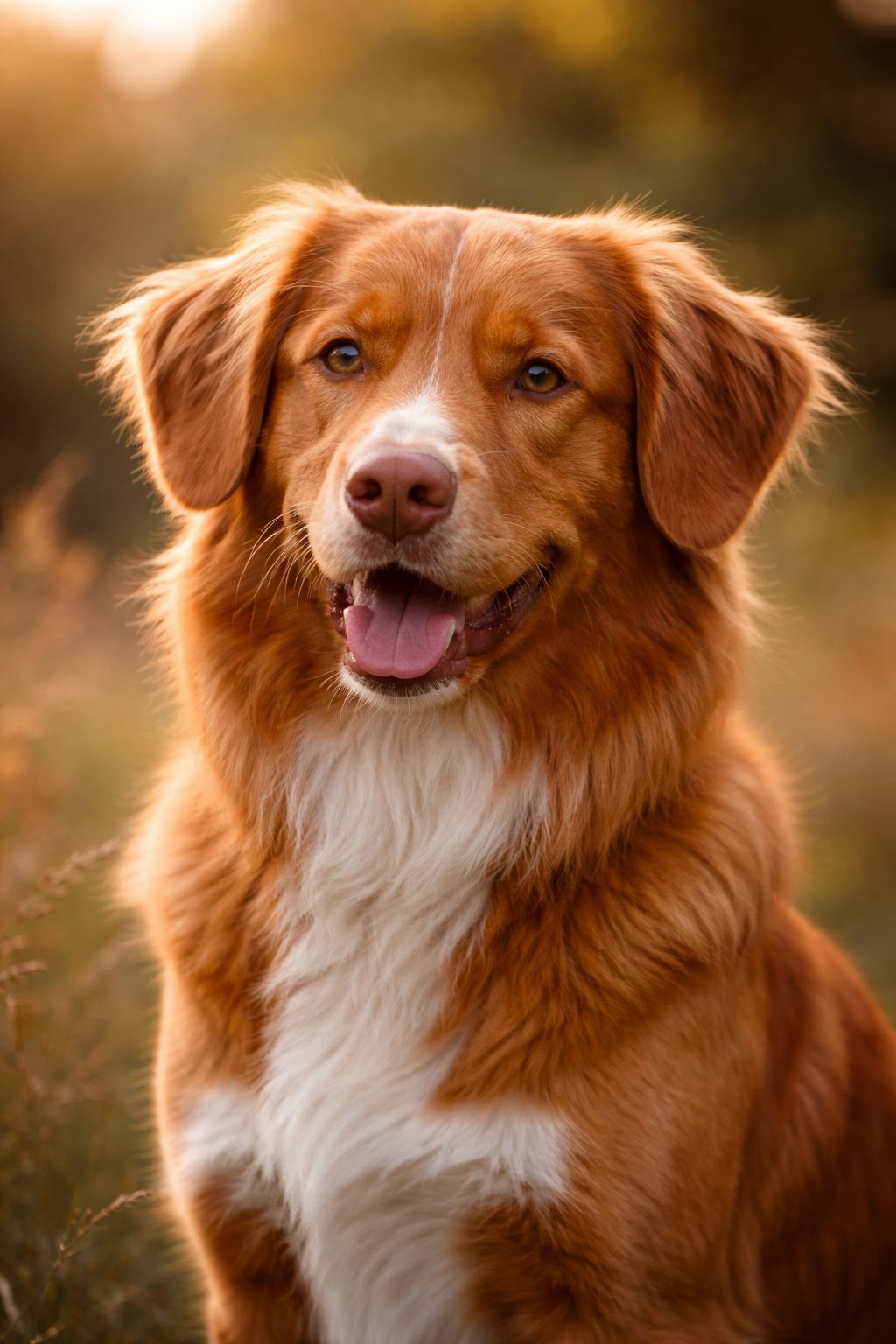
- Toller: independent-smart, has off-switch
- Border Collie: handler-focused, often no off-switch
- Both: extremely intelligent, need mental work
Side-by-side comparison
A quick overview of how the Nova Scotia Duck Tolling Retriever and Border Collie stack up across key traits.
Origins and purpose
The Nova Scotia Duck Tolling Retriever was bred for tolling and retrieving—luring waterfowl within range by playing along the shore, then retrieving downed birds from cold water. They are compact, water-loving sporting dogs developed in Nova Scotia.
The Border Collie was bred for sheepherding in the Scottish borders. Centuries of selective breeding produced an intense stare, lightning reflexes, and an obsession with movement and control. They are working herding dogs through and through.
These origins shape everything: the Toller's love of water and fetch, the Border Collie's need to herd and problem-solve constantly.
Breed origins
- Toller: Nova Scotia, early 1800s—tolling (luring) and retrieving waterfowl
- Border Collie: Scottish Borders—sheepherding, centuries of herding selection
- Different job = different drive and structure
Intelligence and temperament
Both breeds are extremely intelligent. The Border Collie is often ranked the #1 smartest dog breed—they learn commands in minutes, remember sequences, and thrive on complex tasks. They are handler-focused: their world revolves around working with you.
The Nova Scotia Duck Tolling Retriever is independent-smart. They think for themselves, problem-solve on their own, and can be selective about when they engage. They bond deeply but retain a retriever's self-directed streak.
Crucially: the Toller typically has an off-switch when physical and mental needs are met. The Border Collie often does not. Many Border Collies will work until they drop; they need constant jobs and structure to avoid anxiety and obsessive behaviors.
Intelligence comparison
- Toller: Independent problem-solver, thinks for itself
- Border Collie: Handler-focused, eager to learn your cues
- Toller can settle; Border Collie often cannot
- Both need mental stimulation—Border Collie needs more of it
Exercise demands
The Border Collie needs more exercise than the Toller. Most adult Border Collies require 90+ minutes of intense physical work per day, plus substantial mental stimulation. Many thrive on herding, agility, flyball, or other high-drive sports.
The Toller typically needs 60 to 90 minutes of active exercise daily, with mental enrichment such as training games, scent work, or puzzle toys. Both breeds need mental stimulation, but the Border Collie demands more of it—and more frequently—to stay balanced.
Neither breed does well as a couch companion. Under-exercised Border Collies are especially prone to frustration, barking, and obsessive behaviors.
Exercise comparison
Trainability
The Border Collie is more eager to drill. They will repeat commands endlessly if it pleases you, learn long sequences quickly, and often seem to read your mind. They are built to work in partnership with a handler.
The Toller needs creative, varied sessions. They bore quickly with rote repetition and will tune out if training feels dull. Short games, scent work, novelty, and mixed activities keep them engaged. Both respond excellently to positive reinforcement; neither does well with harsh methods.
Border Collies often excel at precision work (obedience, agility, herding trials). Tollers shine in retrieving, water work, and varied sport—where they can use their independent problem-solving.
Training approach
- Border Collie: Eager to drill, thrives on repetition and precision
- Toller: Needs variety, novelty, creative sessions
- Both: positive reinforcement only; both are sensitive
- BC: great for complex sequences; Toller: great for thinking games
Living with each breed
The Border Collie can develop obsessive-compulsive behaviors without enough work. Chasing shadows, herding kids or cars, compulsive licking, and anxiety are common when their drive is not channeled. They need a handler who can provide daily jobs and structure.
The Toller settles better in a pet home. When exercise and mental needs are met, most Tollers can relax indoors, nap, and enjoy downtime. They are still high-energy but typically more forgiving than a Border Collie in a less structured environment.
If you work from home or have a flexible schedule, either can work. If you have long days away, the Border Collie is usually the harder fit—they need more daily engagement than most people can provide.
Household fit
- Border Collie: Needs daily jobs; OCD risk without enough work
- Toller: Settles better in pet homes when needs are met
- BC: best with sport/herding handlers
- Toller: better for active families who want a versatile companion
Grooming comparison
Both breeds are moderate shedders. Neither is hypoallergenic. The Toller has a medium-length double coat with seasonal blows (spring and fall)—weekly brushing year-round, more during coat change. The Border Collie has either a smooth or rough coat; the rough coat requires more brushing to prevent mats.
Both benefit from regular nail trims, ear checks (especially Tollers who swim), and dental care. Grooming demands are similar: moderate maintenance, with the rough-coated Border Collie needing a bit more attention than the Toller.
Coat care comparison
- Toller: Medium double coat, seasonal blows; weekly brushing
- Border Collie: Smooth or rough; rough needs more brushing
- Both: moderate shedding, regular ear/nail care
Health comparison
Both breeds can live long, healthy lives with responsible breeding. Each has breed-specific conditions to screen for.
Nova Scotia Duck Tolling Retrievers are prone to hip and elbow dysplasia, progressive retinal atrophy (PRA), Collie eye anomaly (CEA), juvenile Addison disease (JADD), and Addison's disease. OFA clearances, eye exams, and DNA testing are essential.
Border Collies face hip dysplasia, collie eye anomaly (CEA), epilepsy, and certain genetic conditions. Reputable breeders test hips, eyes, and relevant DNA panels. Both breeds benefit from careful breeder selection.
Breed-specific issues
- Toller: Hip/elbow dysplasia, PRA, CEA, JADD, Addison's
- Border Collie: Hip dysplasia, CEA, epilepsy, genetic screens
- Both: OFA hips, eye exams recommended
- Choose breeders who provide health clearances
Which breed is right for you?
The right choice depends on your lifestyle, energy level, and what you want from a dog. Both require commitment, but in different ways.
If you want an extremely intelligent dog that settles when needs are met, enjoys water and retrieving, and can thrive as an active family companion, the Toller may fit. If you want the ultimate working partner who lives to train and work—and you can provide that daily—the Border Collie may be your match.
Choose a Toller if...
- You can provide 60–90 min exercise but not constant herding-level work
- You want an off-switch—a dog that settles when needs are met
- You enjoy water, retrieving, and varied sport
- You prefer independent-smart over handler-focused-smart
- You want a versatile active companion, not a 24/7 working dog
Choose a Border Collie if...
- You can provide 90+ min intense work and heavy mental stimulation daily
- You want a dog that lives to work and drill with you
- You do herding, agility, flyball, or similar high-drive sport
- You thrive on handler-focused partnership and precision training
- You can channel their drive—or risk OCD behaviors
Related resources
Explore more guides to help you decide.
Lifestyle Hub
Family fit, household dynamics, day-in-the-life with a Toller, and breed comparisons.
Visit the hubBreed Library
Complete breed profile: origins, physical traits, temperament, and the Toller scream.
Read the libraryCare Guide
The cornerstone resource for temperament, exercise, training, grooming, and health.
Read the guide