
Breed Comparisons
Nova Scotia Duck Tolling Retriever vs Golden Retriever
Both are intelligent, affectionate retrievers bred for waterfowl work. But the Toller and Golden differ in size, temperament, energy needs, and trainability. This comparison helps you decide which breed fits your household.
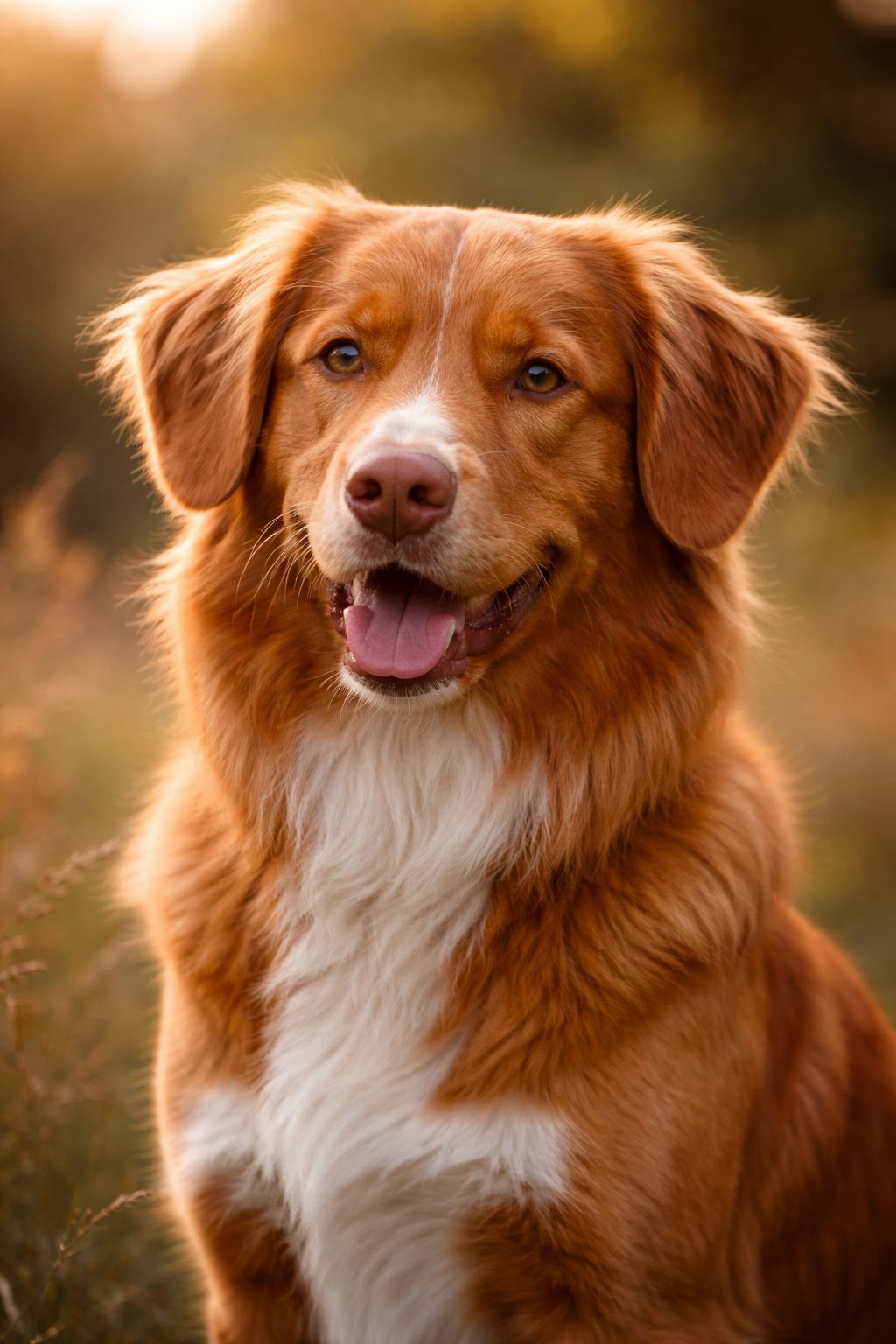
- Toller: smaller, reserved, higher drive
- Golden: larger, universally friendly
- Both: active, trainable, heavy shedders
Side-by-side comparison
A quick overview of how the Nova Scotia Duck Tolling Retriever and Golden Retriever stack up across key traits.
Size and appearance
The most obvious difference is size. The Nova Scotia Duck Tolling Retriever is the smallest of the AKC retriever breeds, standing 17 to 21 inches and weighing 35 to 50 pounds. The Golden Retriever is noticeably larger: 21 to 24 inches and 55 to 75 pounds.
Tollers are compact and muscular with a deep chest, built for agility and cold-water endurance. Goldens have a broader, heavier frame, developed for retrieving larger waterfowl. Coat color differs too: Tollers range from red to golden-red with white markings; Goldens come in shades of gold.
Key measurements
Temperament differences
Temperament is where these breeds diverge most. Golden Retrievers are famously universally friendly. They greet strangers with enthusiasm, make excellent therapy dogs, and typically love everyone they meet.
Nova Scotia Duck Tolling Retrievers are reserved and selective with strangers. They form deep bonds with their family and can be wary of unfamiliar people. This is not shyness or aggression; it is breed-typical selectivity. Tollers choose their people and pour loyalty into that circle.
If you want a dog that welcomes guests and strangers warmly, the Golden is the better fit. If you prefer a dog that bonds intensely with you and is more aloof with outsiders, the Toller may suit you.
Temperament at a glance
Exercise and energy
Both breeds are active and need daily exercise, but the Toller requires more intensity. Most adult Tollers need 60 to 90 minutes of vigorous activity per day plus mental enrichment. A casual walk is rarely enough.
Golden Retrievers are active but often more forgiving. Many Goldens thrive with 45 to 60 minutes of moderate exercise and can settle more easily when needs are met. Tollers tend to channel unmet energy into problem-solving you did not authorize.
For both breeds, swimming, fetching, hiking, and dog sports are ideal. The Toller generally needs higher-intensity outlets and more structured mental work to stay balanced.
Daily exercise comparison
Trainability
Both breeds are highly intelligent and trainable, but they learn differently. Understanding these learning styles helps you pick the right match.
Golden Retriever
Eager to please and handler-oriented. Goldens often learn quickly because they want to make you happy. They respond well to repetition and can tolerate longer training sessions. Ideal for first-time owners who want a forgiving learner.
Nova Scotia Duck Tolling Retriever
Highly intelligent but needs variety. Tollers bore quickly with rote drills. Short, varied sessions with games, scent work, and new challenges keep them engaged. They are quick learners when motivated but will tune out if training feels dull.
Summary
Both excel with positive reinforcement. Golden: forgiving, eager, thrives on repetition. Toller: needs novelty and mental challenge. Neither responds well to harsh methods. Both do well in obedience, agility, and retrieving sports.
Grooming comparison
Both breeds shed heavily. Neither is hypoallergenic. The Golden has a longer, feathered coat that requires more brushing to prevent mats. The Toller has a shorter double coat with a dense undercoat that blows seasonally.
Tollers need weekly brushing year-round, with more frequent grooming during spring and fall coat blows. Goldens typically need brushing several times per week to manage tangles and shedding. Both benefit from regular ear checks, especially if they swim frequently.
Grooming schedule comparison
Health comparison
Both breeds can live long, healthy lives with responsible breeding and care. Each has breed-specific health concerns to screen for.
Golden Retrievers are prone to hip dysplasia, elbow dysplasia, certain cancers (lymphoma, hemangiosarcoma), heart conditions, and eye disorders. Reputable breeders test hips, elbows, eyes, and heart. Cancer incidence is higher in Goldens than many breeds.
Tollers share some overlap (hip/elbow dysplasia, eye issues) but also face conditions like progressive retinal atrophy (PRA), Collie eye anomaly (CEA), and juvenile Addison disease (JADD). DNA testing and OFA clearances are essential.
Breed-specific conditions
- Toller: Hip/elbow dysplasia, PRA, CEA, JADD, Addison's
- Golden: Hip/elbow dysplasia, cancer, heart disease, eye disorders
- Both: OFA hips/elbows, eye exams recommended
- Toller: DNA panel for PRA, CEA, JADD
Which breed is right for you?
The right choice depends on your lifestyle, energy level, and what you want from a dog. Use this framework to narrow your decision.
If you are an active person who hikes, swims, or competes in dog sports and prefers a dog that bonds intensely with you while remaining selective with strangers, the Toller may be the better fit. If you want a larger, universally friendly dog that loves everyone and tolerates more moderate exercise, the Golden may suit you.
Choose a Toller if...
- You can provide 60+ minutes of vigorous exercise daily
- You enjoy training and mental games with variety
- You want a smaller, compact retriever
- You prefer a reserved, selective temperament
- You can handle the Toller scream
Choose a Golden if...
- You want a dog that welcomes strangers warmly
- You prefer moderate to high (not very high) energy
- You want a larger, classic retriever size
- You value eager-to-please, forgiving trainability
- You are okay with heavy shedding and longer coat care
Related resources
Explore more guides to help you decide.
Lifestyle Hub
Family fit, household dynamics, day-in-the-life with a Toller, and breed comparisons.
Visit the hubBreed Library
Complete breed profile: origins, physical traits, temperament, and the Toller scream.
Read the libraryCare Guide
The cornerstone resource for temperament, exercise, training, grooming, and health.
Read the guide