
Breed Library
The Little River Duck Dog: The Origin Story of the Nova Scotia Duck Tolling Retriever
Before it was the Nova Scotia Duck Tolling Retriever, it was the Little River Duck Dog— bred in the marshes and shores of Yarmouth County, Nova Scotia, where Maritime hunters watched foxes lure ducks to shore and decided to replicate the trick.
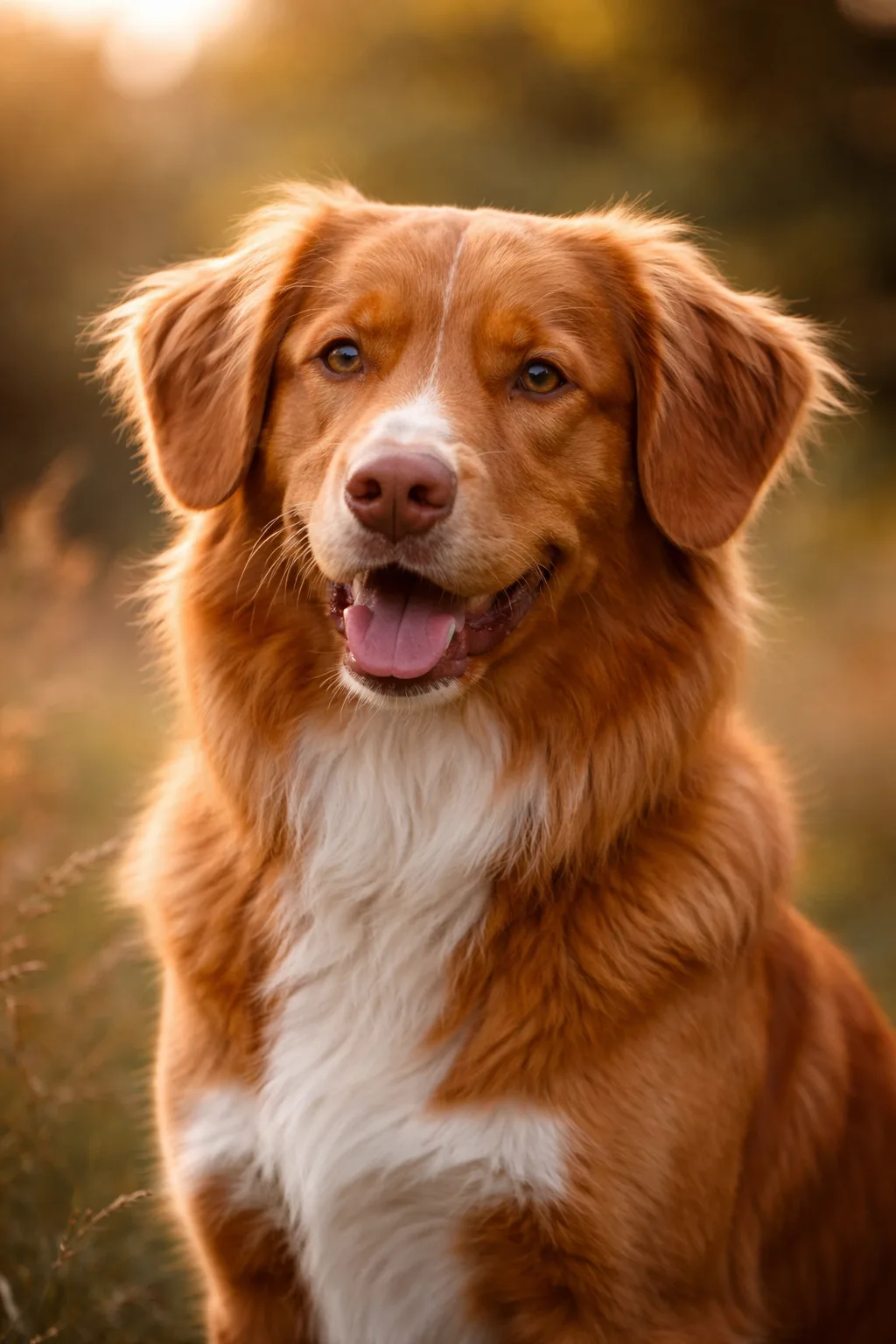
- Original name: Little River Duck Dog
- Place: Yarmouth County, Nova Scotia
- Method: Fox-inspired tolling
- CKC recognition: 1945
The foxes of Little River
Maritime hunters along the Little River district of Yarmouth County noticed something remarkable: foxes along the shoreline would run, leap, and play near the water. Their animated movements triggered something in the waterfowl. Curious ducks would swim closer to investigate, drawn by the spectacle—and within range of a hidden hunter.
This fox behavior, known today as tolling, was a natural hunting technique that foxes had used for generations. The hunters of Little River observed it, understood it, and wanted a dog that could do the same—luring ducks to shore before a shot was ever fired.
The idea was simple but ingenious: breed a dog that could mimic the fox. Compact, agile, playful, and red-coated. A dog that would run the shoreline, disappear into brush, reappear, and keep the ducks curious—all while a hunter waited in a blind.
Key dates: origins
Building the breed
The Little River Duck Dog was not created from a single, documented breeding program. Maritime hunters bred for function, not pedigree. They needed a dog that could toll, retrieve, withstand cold water, and work reliably in marsh and shoreline conditions.
Breeding stock was drawn from whatever was available and effective: small farm collies for intelligence and herding instinct, setters for bird sense, retrievers for water work and fetching, and spaniels for compact size and drive. The exact proportions and which breeds contributed most remain unknown—formal records were not kept by the hunters who developed the dog.
What emerged was a compact, fox-like dog with a water-repellent red coat, keen expression, and an irrepressible desire to play and retrieve. Function shaped the breed; the result was uniquely adapted to Atlantic Canada.
Likely breed influences
- Small farm collies (intelligence, agility)
- Setters (bird sense, pointing instinct)
- Retrievers (water work, retrieving drive)
- Spaniels (compact size, high drive)
The tolling technique
Tolling is the behavior that gives the breed its modern name. The dog plays along the water's edge—retrieving a stick or ball thrown by a hunter hidden in a blind. Its movements mimic a fox: running, jumping, disappearing into brush, reappearing. The play is genuine; the dog is having fun. But the effect on waterfowl is deliberate.
Ducks are curious by nature. Movement and commotion along the shore attract their attention. The dog's playful antics draw them closer. When enough ducks are within range, the hunter signals the dog to lie down and hide. The shot is taken. The dog then switches roles from lure to retriever, plunging into cold water to bring back the bird.
This dual purpose—lure and retriever—required a dog with unusual versatility: playful enough to toll, obedient enough to stop on cue, and driven enough to retrieve in ice-cold water. The Little River Duck Dog was built for exactly that.
Step-by-step tolling process
- Hunter conceals himself in a blind near shoreline
- Dog plays and retrieves bumper along the bank
- Curious ducks swim closer to investigate
- Hunter signals dog to lie down and hide
- Shot is taken when ducks are in range
- Dog retrieves the downed bird from the water
From working dog to recognized breed
For decades the Little River Duck Dog remained a regional working breed, known to hunters in Nova Scotia and the Maritimes but largely unknown beyond. That changed in the 20th century when breed enthusiasts began documenting the dogs and pushing for formal recognition.
In 1945 the Canadian Kennel Club officially recognized the breed—and with recognition came a new name: the Nova Scotia Duck Tolling Retriever. The CKC adopted the descriptive name that highlighted both the breed's origin (Nova Scotia) and its unique hunting method (tolling). "Little River Duck Dog" faded into history, though it remains the breed's original identity.
Recognition brought breed standards, stud books, and structured breeding. The working dog of Yarmouth County had become an official Canadian breed.
Timeline: working dog to CKC
Near extinction and revival
After CKC recognition, the breed's numbers did not grow quickly. By the mid-20th century the Nova Scotia Duck Tolling Retriever was rare—some estimates suggest fewer than two dozen registered Tollers at certain points. The breed faced a real risk of extinction.
Dedicated breeders in Canada and, later, the United States and Europe worked to rebuild the population. They tracked down working Tollers, established breeding programs, and promoted the breed both as a hunting companion and as a versatile sport and family dog. Key figures in Canadian and American breed clubs drove the revival.
By the 1980s the breed had gained a foothold outside Canada. Interest in dog sports, especially agility and obedience, drew new owners. The Toller's intelligence, agility, and striking appearance made it a standout. The Little River Duck Dog, once nearly lost, had found a global audience.
Key figures and events
- Mid-20th century: Breed population critically low
- Canadian breeders: Preservation and foundation stock
- 1980s: Growth in US and European interest
- NSDTRC (Canada) and NSDTRC-USA: Breed club leadership
- Dog sports: Agility and obedience showcase the breed
International recognition
Official recognition by major kennel clubs around the world.
CKC 1945
Canadian Kennel Club recognition. The breed's first official registry and the adoption of the name Nova Scotia Duck Tolling Retriever.
FCI
Recognition by the Fédération Cynologique Internationale, the international canine organization that governs breed standards in many countries.
AKC 2003
Admitted to the American Kennel Club Sporting Group, cementing the breed's status as a recognized retriever in the United States.
UKC
United Kennel Club recognition, offering additional competition and registration opportunities for Toller owners in North America.
The breed today
The modern Nova Scotia Duck Tolling Retriever is a far cry from the obscure Little River Duck Dog of the early 1800s. Today the Toller is prized as a versatile companion and sport dog: agility, dock diving, obedience, rally, and flyball are common pursuits. Many Tollers never see a duck blind.
Yet the breed retains its original purpose. Tollers bred for hunting still toll and retrieve with the same enthusiasm as their ancestors. The instincts are intact—playfulness, focus, drive, and a love of water. Whether working in the marsh or competing in the ring, the Little River Duck Dog's legacy lives in every Toller.
Then and now
Related resources
Go deeper with these breed and history guides.
Breed history
The Little River Duck Dog to milestones: the full story of the Nova Scotia Duck Tolling Retriever.
Read the guideThe Breed Library
Origins, breed standard, physical traits, temperament, and the Toller scream.
Read the guideAre Tollers rare?
Registration numbers, waitlist reality, and what to expect when finding a responsible breeder.
Read the guideStory: From Yarmouth shores
The narrative version — the secret, the near-loss, and the long road to a long name.
Read the story