
The Breed Library
Nova Scotia Duck Tolling Retriever: The Complete Breed Profile
From the foggy shores of Nova Scotia to living rooms worldwide, the Toller — also called the duck toller, toller retriever, or toller dog — is the smallest retriever with the biggest personality. Explore the breed's origins, physical standard, temperament, and what makes this dog unlike any other sporting breed.
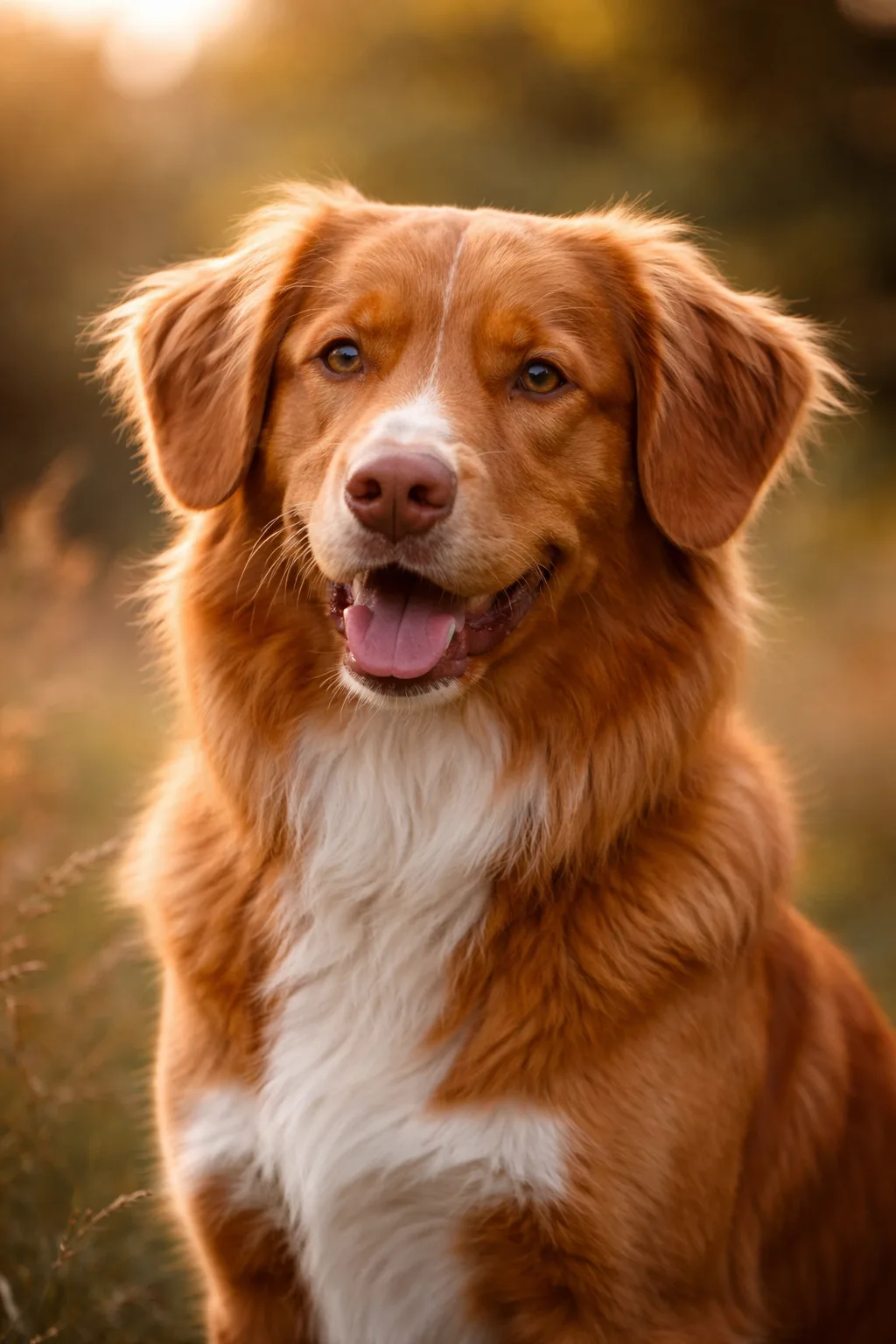
- Group: Sporting (AKC)
- Height: 17 - 21 inches
- Weight: 35 - 50 lbs
- Lifespan: 12 - 14 years
Key facts: the Toller breed
- Origin: Yarmouth County, Nova Scotia, Canada (19th century).
- Group: AKC Sporting (recognized 2003); smallest of the retrievers.
- Size: about 17–21 in (43–53 cm), 35–50 lb (16–23 kg).
- Coat: water-repellent double coat, red/orange with white markings.
- Lifespan: 12–14 years.
Origins: the Little River Duck Dog
The Nova Scotia Duck Tolling Retriever traces its roots to the Little River district of Yarmouth County, Nova Scotia, in the early 19th century. Hunters observed wild foxes playing along the shoreline, their antics drawing curious ducks closer to shore. They set out to create a dog that could replicate this behavior.
The result was a compact, agile retriever with a fox-like appearance and an irresistible playfulness. Originally called the Little River Duck Dog or the Yarmouth Toller, the breed was refined over generations by Maritime hunters who prized function above pedigree.
Breeding stock likely included crosses of small farm collies, setters, retrievers, and spaniels, though exact records from the era do not exist. What survived is a breed perfectly adapted to the cold waters and marshes of Atlantic Canada.
Full breed history Little River Duck Dog origin storyKey historical dates
How tolling works
Tolling is the behavior that gives this breed its name. The dog plays at the water's edge, retrieving a stick or ball thrown by a concealed hunter. The dog's animated, playful movements mimic a fox and trigger the natural curiosity of waterfowl, drawing them closer to shore and within range.
Once the shot is fired, the Toller switches from lure to retriever, plunging into cold water to bring back the bird. This dual purpose requires a unique combination of playfulness, obedience, drive, and physical toughness found in few other breeds.
Modern Tollers retain strong tolling instincts even when they never see a duck blind. The same behaviors that make them effective in the field, energetic play, intense focus, and eager retrieving, make them exceptional sport and companion dogs.
Tolling in practice
- Hunter hides in a blind near the shoreline
- Dog plays and retrieves a bumper along the bank
- Curious ducks swim closer to investigate
- Hunter signals the dog to lie down and hide
- Shot is taken; dog retrieves the downed bird
Breed standard overview
The AKC and CKC breed standards describe a medium-sized, powerful, compact retriever built for agility and endurance in cold water. Key traits emphasize balance, a keen expression, and a water-repellent double coat.
Physical traits in detail
The Toller's body is built for function: cold-water retrieves, agile shoreline movement, and sustained field work.
Head and expression
A wedge-shaped head with a slightly rounded skull and a broad, tapered muzzle. The expression is alert and intelligent with almond-shaped eyes that range from amber to brown. Ears are triangular, set high, and carried close to the head.
Coat and color
A medium-length double coat with a dense, soft undercoat and a water-repellent outer coat. Color ranges from deep coppery red to golden red. White markings are common on the chest, feet, tail tip, and sometimes a blaze on the face.
Tail
The hallmark "toller tail" is broad at the base and heavily feathered. Carried high and waving during activity, it acts as a visual lure during tolling. At rest, the tail hangs in a slight curve.
Body and structure
Deep chest with well-sprung ribs provides lung capacity for sustained swimming. The back is short and straight, giving the compact, powerful silhouette that distinguishes the breed from larger retrievers.
Feet
Strongly webbed for efficient swimming. Compact, oval-shaped pads provide traction on slippery terrain. Dewclaws are typically present on the front legs.
Movement
Smooth, effortless gait with good reach and strong rear drive. The breed moves with a springy step that reflects its playful nature and athletic build. Correct movement is light and agile, never heavy or plodding.
Temperament profile
The Toller temperament is a blend of high intelligence, intense drive, and deep loyalty. They are often described as the most "cat-like" of the retriever breeds: affectionate on their terms, watchful, and occasionally independent.
With their family they are devoted and playful. With strangers they tend to be reserved, not aggressive, but not the greeting-committee dog that a Golden Retriever might be. This selectivity is a breed trait, not a flaw.
Tollers need a job. Without purposeful activity they channel their intelligence into problem-solving you did not authorize: opening cabinets, disassembling toys, or inventing games that involve your furniture. A working Toller is a happy Toller.
Full temperament guideTemperament traits
The Toller scream
Perhaps the most talked-about breed trait is the "Toller scream," a high-pitched, piercing vocalization triggered by excitement, anticipation, or frustration. It is unlike a bark, closer to a bird-like shriek that can startle anyone hearing it for the first time.
The scream is not a behavioral problem. It is a hardwired expression of arousal common to the breed. Most Tollers scream before a retrieve, when they see the leash come out, or when a car door opens at the trailhead.
Management focuses on rewarding calm behavior rather than trying to eliminate the sound entirely. Consistency from puppyhood is key: never reward the scream with the thing the dog wants. Wait for four on the floor and a closed mouth, then release to the reward.
Toller scream guideScream quick facts
- Normal breed trait, not a behavioral disorder
- Triggered by excitement and anticipation
- Volume varies by individual
- Can be managed but rarely eliminated
- Not every Toller screams at the same intensity
Rarity and availability
The Nova Scotia Duck Tolling Retriever consistently ranks outside the top 80 AKC breeds by registration. Annual litter counts are limited, and responsible breeders often maintain waitlists of 6 to 18 months.
The breed is most common in Canada, Scandinavia, and parts of Northern Europe. In the United States, regional clusters exist in the Pacific Northwest, New England, and the mid-Atlantic states, but finding a breeder may require travel.
Rarity has advantages: a tight-knit breed community, passionate breeders who prioritize health testing, and dogs bred for temperament rather than commercial demand.
Toller rarity guideFinding a Toller
- Contact NSDTRC-USA or CKC breed clubs
- Expect 6 - 18 month waitlists
- Ask for OFA, CERF, and DNA clearances
- Visit the breeder's home when possible
- Avoid breeders without health testing
Frequently asked questions
Common breed questions answered.
Breed Library resources
Go deeper with these supporting guides.
Breed history
From the Little River Duck Dog to AKC recognition: the full story of the Nova Scotia Duck Tolling Retriever.
Read the guideWhat is tolling?
The fox-like duck-luring behavior that named the breed — how it works and why ducks fall for it.
Read the guideTemperament guide
Intelligence, intensity, and the Toller scream explained for families and multi-pet homes.
Read the guideUnderstanding the scream
Why Tollers vocalize, what triggers it, and how to build calmer, quieter routines with your dog.
Read the guideAre Tollers rare?
Registration numbers, regional availability, and what to expect when searching for a responsible breeder.
Read the guideFamily fit & temperament
Is a Toller right for your household? Children, other pets, and lifestyle considerations.
Read the guideComplete care guide
The cornerstone resource for temperament, exercise, training, grooming, and health at every life stage.
Read the guide