
Breed Comparisons
Nova Scotia Duck Tolling Retriever vs Australian Shepherd
Both are high-energy, athletic breeds built for demanding work, but their drives differ: the Toller is a waterfowl retriever bred to toll and fetch, while the Aussie is a livestock herder bred to control and move stock. This comparison helps you decide which breed matches your lifestyle.
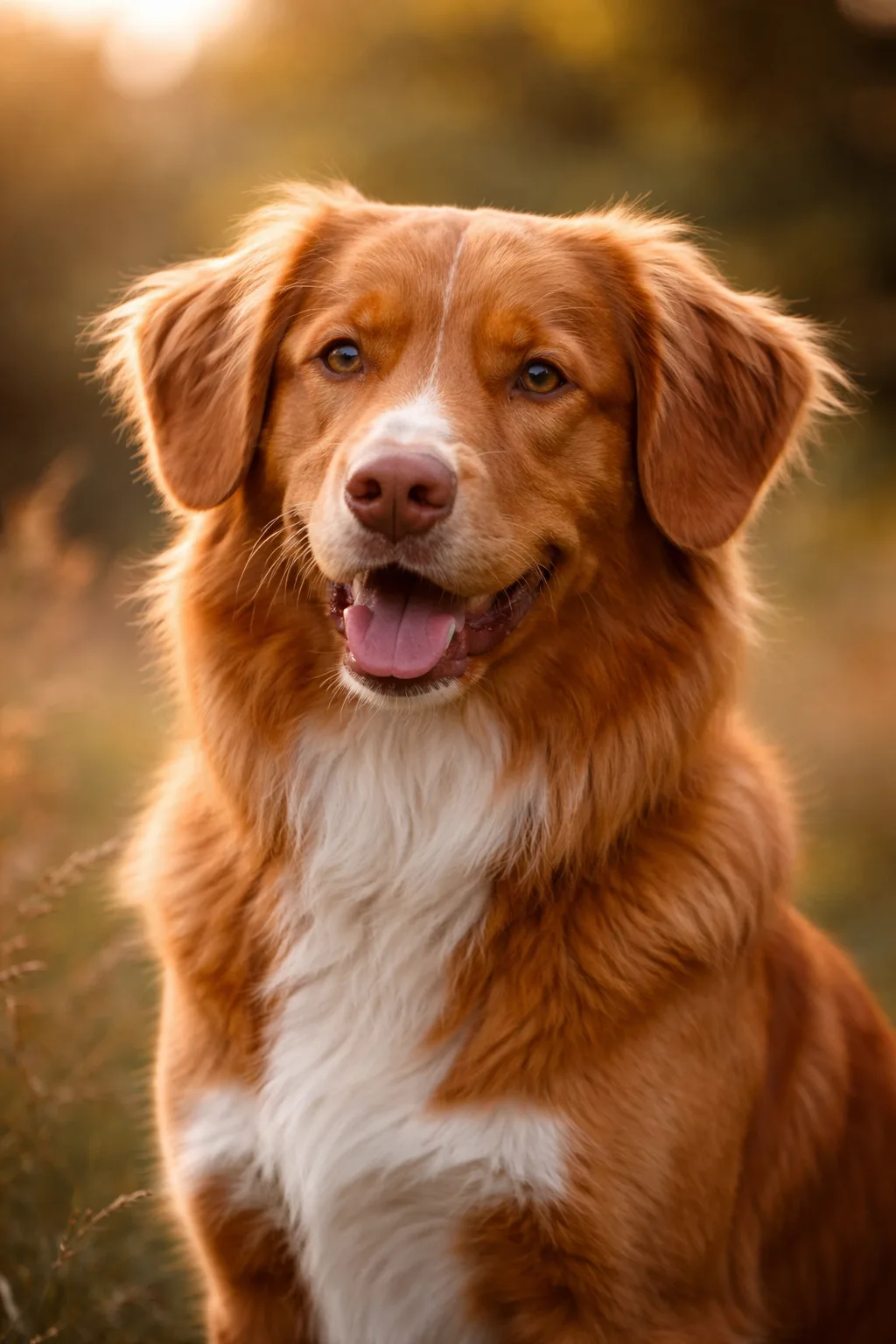
- Toller: retrieve drive, water-focused, reserved with strangers
- Aussie: herding drive, handler-focused, can be protective
- Both: very high energy, highly trainable, double-coated shedders
Side-by-side comparison
A quick overview of how the Nova Scotia Duck Tolling Retriever and Australian Shepherd stack up across key traits.
Origins and purpose
The Nova Scotia Duck Tolling Retriever was bred in Nova Scotia, Canada, to lure (toll) waterfowl within gun range by playing along the shoreline, then retrieve shot birds from water. The breed excels at swimming, marking falls, and delivering softly to hand.
The Australian Shepherd was developed in the American West to work livestock, primarily sheep and cattle. Aussies are bred to herd, move, and control stock using eye, presence, and movement. Their drive is to gather, drive, and hold animals.
Both breeds are working dogs with strong instincts, but their job shapes their drives: Tollers want to fetch and carry; Aussies want to chase, circle, and control movement.
Breed origin summaries
Temperament differences
Both breeds are intelligent, driven, and bond strongly with their people. The Toller tends to be more independent and thinks for itself; the Aussie is typically more handler-focused and looks to you for direction.
Tollers are reserved with strangers. They form deep bonds with family and can be watchful or aloof around unfamiliar people. This is breed-typical selectivity, not shyness or aggression. Aussies can also be reserved with strangers and may display protective instincts around their home and family.
Neither breed is a universal extrovert. Both need early socialization to build confidence. If you want a dog that is handler-oriented and thrives on working with you, the Aussie may suit. If you prefer a more independent thinker who bonds intensely but selectively, consider the Toller.
Trait comparison
Exercise and energy
Both breeds are very high energy and need substantial daily exercise and mental stimulation. A casual walk is insufficient for either.
The Toller satisfies its drive through retrieval: fetch, dock diving, water work, and scent games. A Toller with unmet drive may invent its own jobs—usually ones you did not authorize.
The Aussie satisfies its drive through herding, chasing, and movement. Agility, herding trials, flyball, frisbee, and structured work help channel energy. Aussies may try to herd kids, pets, or cyclists if under-exercised.
Daily exercise comparison
Trainability
Both breeds are highly trainable and quick learners. The difference lies in how they learn and what keeps them engaged.
Aussies are typically eager to repeat tasks and please their handler. They often excel at obedience drills and can handle longer, more repetitive sessions. They thrive when given clear jobs and consistent feedback.
Tollers need variety. They bore quickly with rote drills and tune out when training feels dull. Short, varied sessions with games, scent work, and new challenges keep them engaged. Both respond best to positive reinforcement; neither does well with harsh methods.
Training style tips
- Toller: Short sessions, frequent variety, games and scent work
- Aussie: Clear structure, repetition, and handler-focused rewards
- Both: Positive reinforcement, mental stimulation essential
Grooming comparison
Both breeds have double coats and shed heavily. Neither is hypoallergenic. Coat length and texture differ: Tollers have a medium, water-repellent coat with a dense undercoat; Aussies have a longer, thicker coat that can be straight or wavy.
Tollers need weekly brushing year-round, with more frequent grooming during spring and fall coat blows. Aussies typically need regular brushing several times per week to prevent mats, especially behind ears and in feathering. Both benefit from regular ear checks.
Grooming frequency comparison
Health comparison
Both breeds can live long, healthy lives with responsible breeding and care. Each has breed-specific health concerns to screen for.
Australian Shepherds are prone to hip dysplasia, elbow dysplasia, certain eye conditions (including Collie eye anomaly, cataracts), epilepsy, and some autoimmune disorders. Reputable breeders test hips, elbows, and eyes; Aussies may carry the MDR1 mutation affecting drug sensitivity.
Tollers share overlap (hip/elbow dysplasia, eye issues) and face conditions like progressive retinal atrophy (PRA), Collie eye anomaly (CEA), and juvenile Addison disease (JADD). DNA testing and OFA clearances are essential for both breeds.
Breed-specific conditions
- Toller: Hip/elbow dysplasia, PRA, CEA, JADD, Addison's
- Aussie: Hip/elbow dysplasia, eye disorders, epilepsy, MDR1 mutation
- Both: OFA hips/elbows, eye exams recommended
Which breed is right for you?
The right choice depends on your lifestyle, how you want to channel your dog's drive, and what temperament fits your household.
If you love water sports, retrieval work, and a dog that bonds intensely while remaining selective with strangers, the Toller may be the better fit. If you prefer herding, agility, or a handler-focused dog that wants to work beside you, the Aussie may suit you.
Choose a Toller if...
- You can provide 60+ minutes of vigorous exercise daily
- You enjoy water sports, fetch, and retrieval work
- You want training with variety and mental challenge
- You prefer a more independent, reserved temperament
- You can handle the Toller scream
Choose an Aussie if...
- You want a handler-focused dog that thrives on direction
- You enjoy herding, agility, or structured work
- You have space for chasing and movement-based activities
- You prefer a dog eager to repeat and please
- You are okay with potential herding instincts around kids/pets
Related resources
Explore more guides to help you decide.
Lifestyle Hub
Family fit, household dynamics, day-in-the-life with a Toller, and breed comparisons.
Visit the hubBreed Library
Complete breed profile: origins, physical traits, temperament, and the Toller scream.
Read the libraryCare Guide
The cornerstone resource for temperament, exercise, training, grooming, and health.
Read the guide